
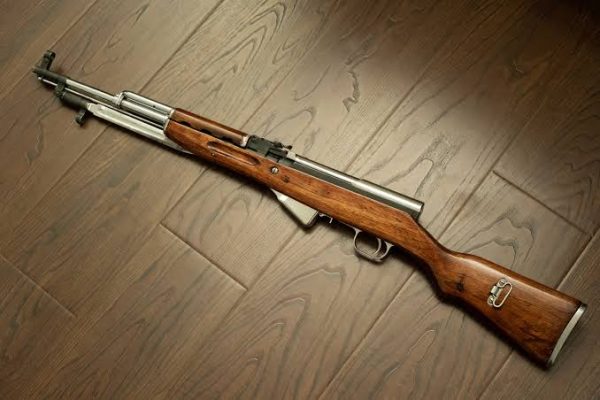
A Comprehensive Guide to the Legendary Semi-Automatic Carbine
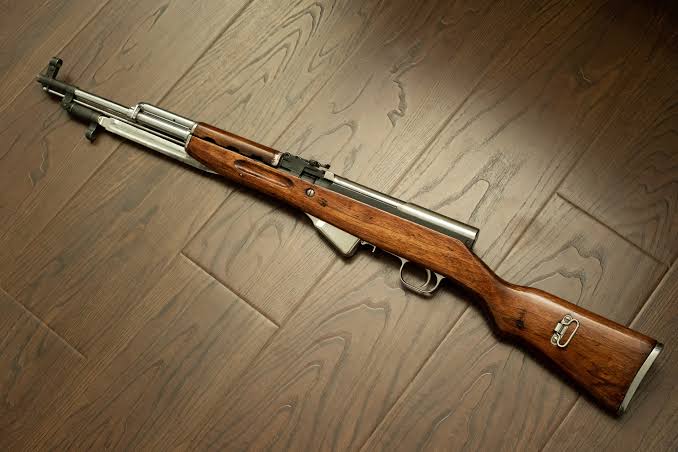
In the world of military surplus firearms, few rifles have achieved the legendary status of the SKS. Designed by Sergei Simonov, this semi-automatic carbine bridged the gap between the bolt-action rifles of World War II and the assault rifles of the modern era. Today, the SKS gun remains one of the most popular and accessible military surplus rifles on the market, prized by collectors, hunters, and shooters alike for its reliability, ruggedness, and historical significance.
At [Your Premium Gun Store Name], we are proud to offer a curated selection of these iconic firearms. Whether you are searching for a Russian SKS with its distinctive Cold War pedigree or a China SKS (Type 56) for its affordability and abundance, we have the knowledge and inventory to help you find the perfect piece for your collection.
In this comprehensive guide, we will explore the rich history of the SKS rifle, break down its variants, examine its performance, and answer the most frequently asked questions to help you make an informed purchase. If you are looking for an SKS for sale, you have come to the right place.
The History of the SKS: From Soviet Drawing Board to Global Icon
The Birth of a New Carbine
The story of the SKS begins during the crucible of World War II. The Soviet Red Army recognized a pressing need for a modern, self-loading rifle to replace the aging Mosin-Nagant bolt-action rifles that had served since 1891 . While the Mosin-Nagant was a proven and rugged design, it was heavy, had excessive recoil, and its small five-round magazine limited a soldier’s firepower .
Sergei Simonov, a Russian firearms designer who had previously created the AVS-36 select-fire rifle, was tasked with developing a new carbine . The challenge was to design a reliable semi-automatic weapon chambered for the newly developed 7.62x39mm M1943 cartridge—the same round that would later power the legendary AK-47 . This new cartridge offered a more manageable recoil than the older 7.62x54mmR round, making it ideal for a lighter, more controllable infantry weapon .
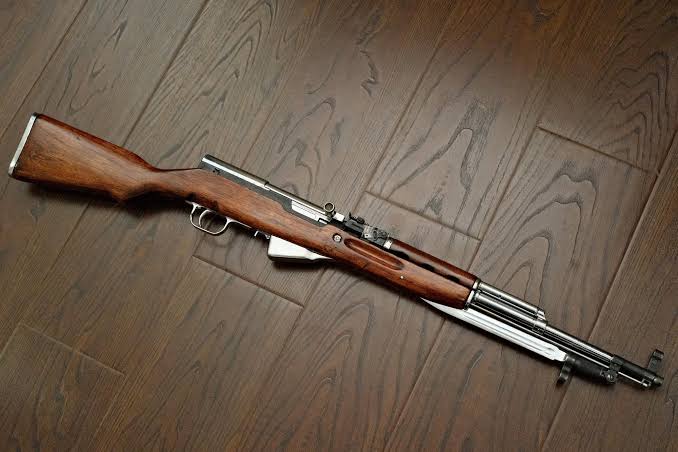
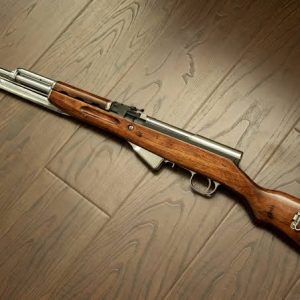
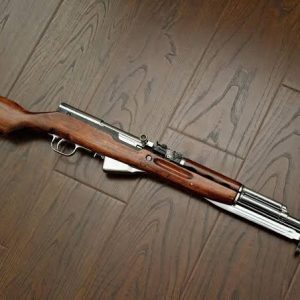
Simonov adapted the operating system from his successful PTRS-41 anti-tank rifle, scaling it down for the smaller cartridge . The result was a gas-operated carbine with a conventional wood stock, a 10-round fixed internal magazine fed by stripper clips, and a folding bayonet . The design was accepted shortly after the war’s end and officially adopted in 1949 as the “Self-loading Carbine System Simonov 1945,” or SKS-45 .
The Rise of the AK-47
Despite its many virtues, the SKS had a relatively short career as the standard-issue rifle of the Soviet military. The arrival of Mikhail Kalashnikov’s AK-47, with its detachable 30-round magazine and select-fire capability, quickly made the SKS obsolete for frontline troops .
However, the SKS did not simply disappear. It remained in service with Soviet border guards, ceremonial units, and reserve forces for decades . Its enduring legacy would be cemented not in the Soviet Union itself, but in the hands of its allies and satellite states.
Global Spread: The Chinese Type 56 and Beyond
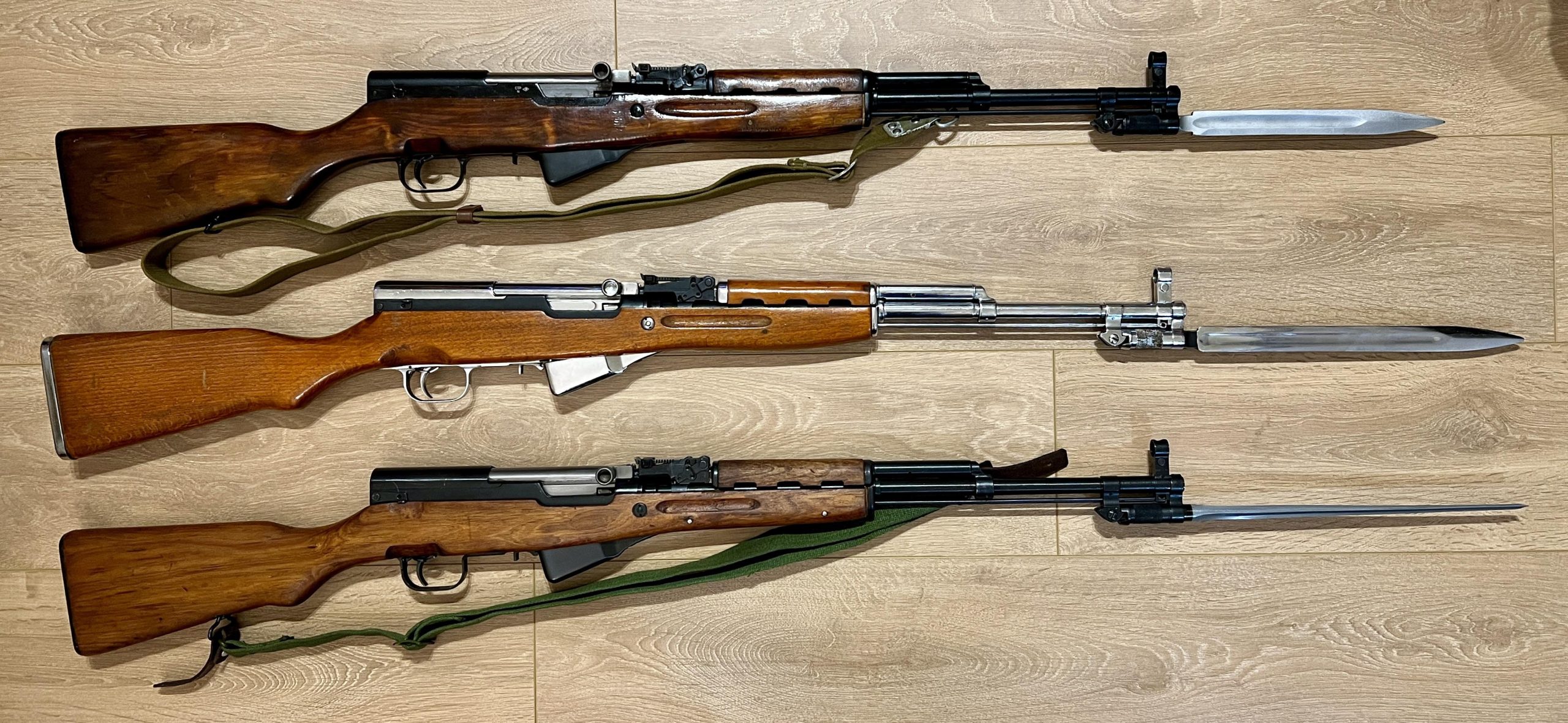
Perhaps the most significant chapter in the SKS story is its adoption and mass production by the People’s Republic of China. During the height of the Cold War, the Soviet Union shared the SKS technology with its Chinese allies . China went on to produce millions of these rifles as the Type 56 carbine, making it the most numerous variant of the SKS in existence .
The China SKS became the backbone of the People’s Liberation Army and was also supplied in vast numbers to North Vietnam, where it served as a front-line weapon and a civilian rifle for village defense . The SKS also saw use in the Sino-Vietnamese War and remains in insurgent stockpiles around the world .
Other nations, including Yugoslavia, produced their own versions of the SKS. While the Yugoslavian SKS shares the same basic action, it features a longer barrel, a blade-style bayonet, and a gas shut-off valve for launching rifle grenades . It also notably lacks a chrome-lined barrel, a potential issue when firing corrosive surplus ammunition .
SKS Variants: Russian vs. Chinese vs. Other Models
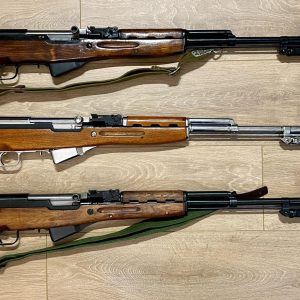
When searching for an SKS for sale, you will encounter several different variants. Here is a breakdown of the most common types:
Russian SKS (SKS-45)
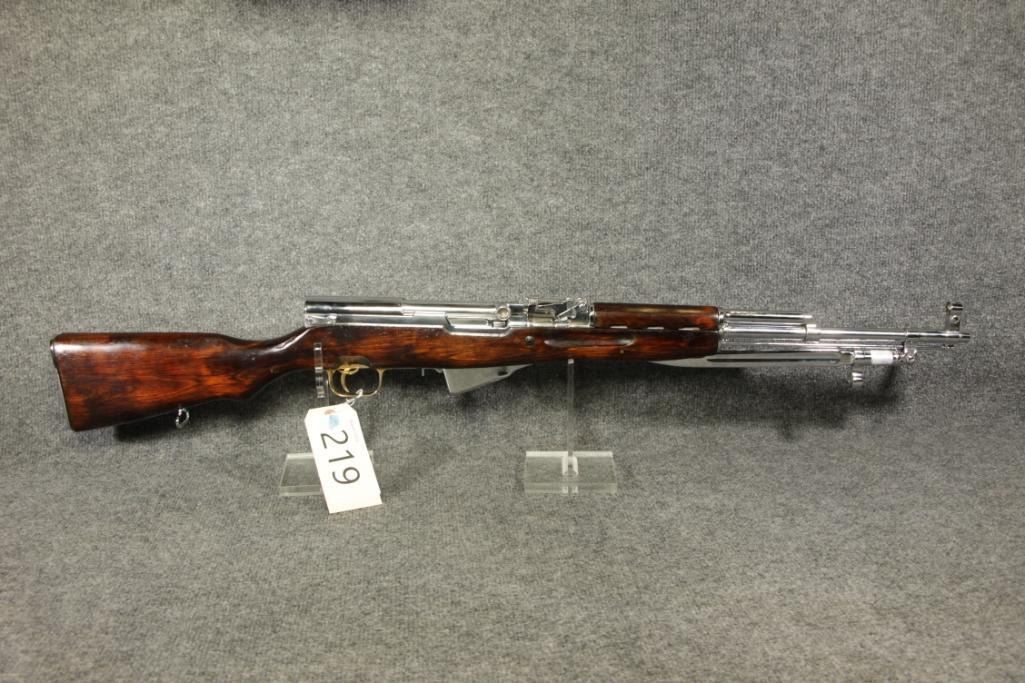
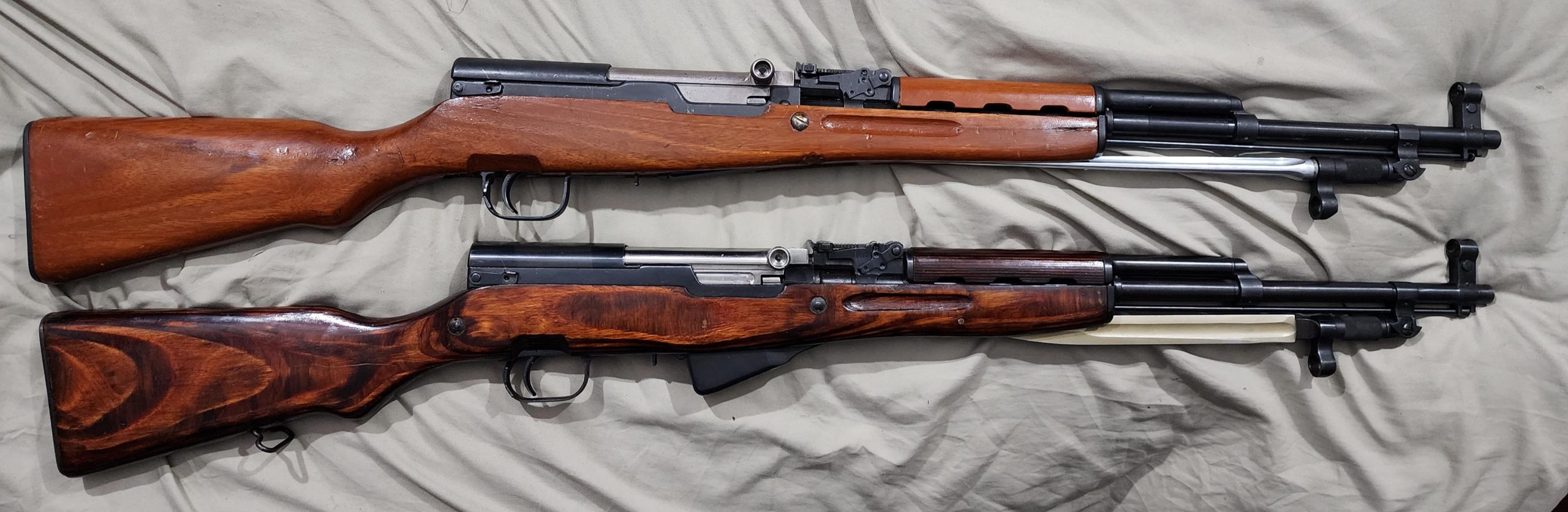
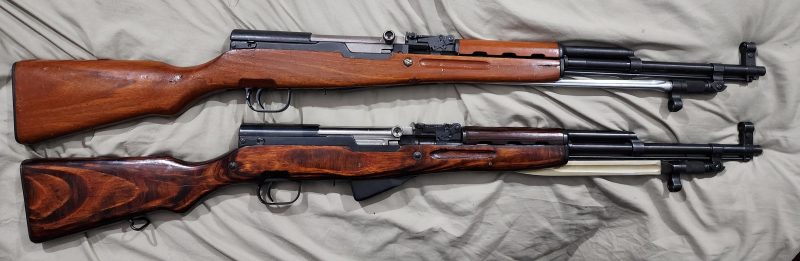
The Russian SKS is the original and most highly sought-after variant for collectors. Produced at the Tula and Izhevsk arsenals from 1949 until the mid-1950s , Russian SKS rifles are known for their high-quality fit and finish, chrome-lined barrels, and distinctive stamped or milled receivers. A prime example, such as a 1952 Tula SKS with a laminated stock, can command a premium price due to its craftsmanship and historical value .
Chinese SKS (Type 56)
The China SKS, designated the Type 56, is the most common and affordable variant on the market today. Produced in massive numbers by Chinese arsenals such as Factory 316 , these rifles are known for their rugged reliability. They typically feature a spike bayonet rather than the blade bayonet found on Russian or Yugoslavian models . While the overall quality may be slightly more utilitarian than their Russian counterparts, they are extremely functional and represent an excellent value. Prices for a Chinese SKS in good condition with matching serial numbers often range from approximately $895 to $1,095, depending on condition and factory markings .
Other Variants
-
Yugoslavian SKS: Features a blade bayonet, grenade launcher attachment, and a heavier stock. Lacks a chrome-lined bore.
-
Romanian and East German SKS: Produced in smaller numbers and are considered more rare.
Technical Specifications: The SKS at a Glance
Understanding the mechanics of the SKS rifle is key to appreciating its design. Here are the core specifications shared across most variants:
| Feature | Specification |
|---|---|
| Caliber | 7.62x39mm |
| Action | Gas-operated, semi-automatic |
| Capacity | 10 rounds (fixed internal magazine) |
| Barrel Length | Approximately 20.2 inches (varies by variant) |
| Overall Length | Approximately 40.1 inches |
| Weight (Unloaded) | Approx. 8.5 lbs |
| Feed System | Stripper clips or single loading |
| Stock Material | Wood (hardwood or laminated) |
Why the SKS Remains a Favorite
Reliability and Ruggedness
The SKS gun is often described as the “cockroach” of rifles—it just refuses to die . Its design is simple, robust, and remarkably tolerant of neglect. The long-stroke gas piston system and tilting-bolt locking mechanism are known for their reliability and ease of maintenance .
Historical Significance
Owning an SKS is like owning a tangible piece of Cold War history. These rifles were carried by soldiers across multiple continents and conflicts. A Russian SKS connects you to the early days of the Cold War, while a China SKS (Type 56) evokes the era of the Vietnam War and the rise of Chinese military power.
Power and Versatility
The 7.62x39mm cartridge is a capable hunting round, suitable for taking down deer, hogs, and other medium game . The rifle’s manageable recoil makes it a pleasure to shoot for extended range sessions.
Affordability
Historically, the SKS was one of the most affordable military surplus rifles on the market. While prices have risen in recent years, it remains a cost-effective entry point into the world of military surplus collecting and shooting .
The SKS in the Modern Market
Russian SKS for Sale: A Collector’s Prize
Genuine Russian SKS rifles are becoming increasingly scarce, making them highly desirable for collectors. A rifle from a desirable production year, such as 1952, with matching serial numbers and a pristine bore, can fetch a significant sum .
China SKS for Sale: The Workhorse
The Chinese SKS (Type 56) remains the most accessible option. Even though U.S. restrictions limited imports from Norinco in the 1990s, millions of these rifles are already in circulation and available on the secondary market . They offer the same reliability as their Russian cousins at a more accessible price point, making them an excellent choice for shooters and entry-level collectors.
What to Look for When Buying an SKS
When browsing our inventory for an SKS for sale, here are a few crucial factors to consider:
-
Matching Serial Numbers: Look for a rifle where the serial numbers on the receiver, bolt, magazine floorplate, and stock all match. This indicates the rifle remains in its original configuration .
-
Bore Condition: The condition of the barrel is vital for accuracy. A bright, shiny bore with strong, well-defined rifling is a sign of a well-maintained rifle .
-
Arsenal Markings: Familiarize yourself with the markings for different arsenals. The Tula “star” or Izhevsk “arrow in triangle” are marks of quality on Russian rifles . Chinese rifles will have factory numbers (e.g., “Factory 316”) .
-
Bayonet: Ensure the bayonet is present and functions correctly. The type of bayonet (spike for Chinese, blade for Russian and Yugoslavian) can affect the rifle’s value .
-
Accessories: Original accessories like the cleaning kit and oil bottle, though small, can add to the value and completeness of the rifle .
Frequently Asked Questions (FAQs)
Q1: What does SKS stand for?
A: SKS stands for “Self-loading Carbine of the Simonov System” (or SKS-45, referring to the year of design). It was designed by Sergei Simonov .
Q2: What is the difference between a Russian SKS and a Chinese SKS?
A: The Russian SKS was the original design, produced from 1949-1956, and is highly sought after for its quality. The China SKS (Type 56) is a licensed copy produced in massive numbers. Chinese versions typically feature a spike bayonet, while Russian versions have a blade bayonet .
Q3: Is the SKS a good rifle for hunting?
A: Yes. The 7.62x39mm cartridge is powerful enough for small and medium-sized game, including deer and hogs . Its manageable recoil and rugged construction make it a practical hunting rifle.
Q4: How many rounds does an SKS hold?
A: The standard SKS features a 10-round fixed internal magazine . The magazine can be loaded using a stripper clip or by loading individual rounds.
Q5: Can I mount a scope on an SKS?
A: The SKS was not designed with a scope mount in mind. However, aftermarket scope mounts are available that attach to the receiver or replace the rear sight . These require some modification or may not hold zero perfectly.
Q6: Is the SKS still in use today?
A: Yes. Despite being superseded by the AK-47, the SKS is still in use with some military forces, border guards, and insurgent groups around the world .
Reviews
There are no reviews yet.