
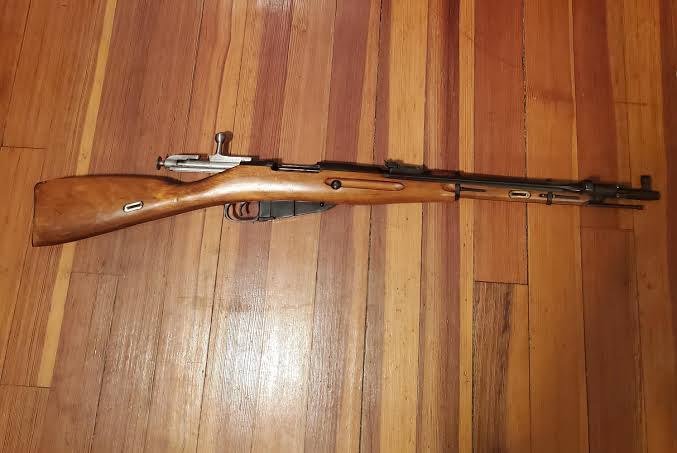
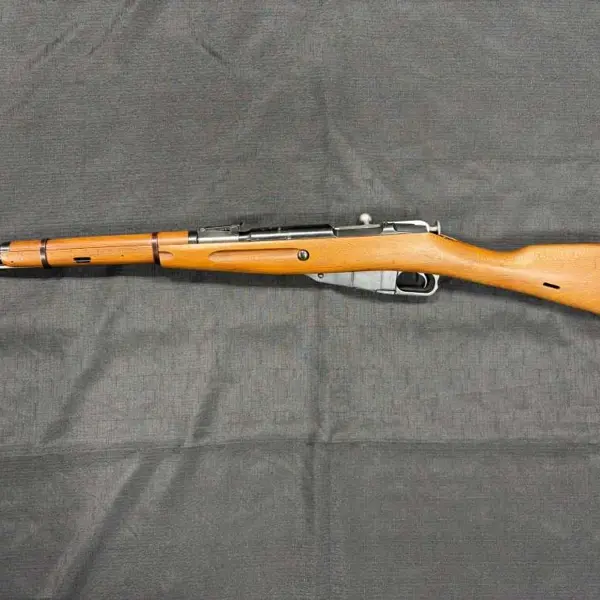
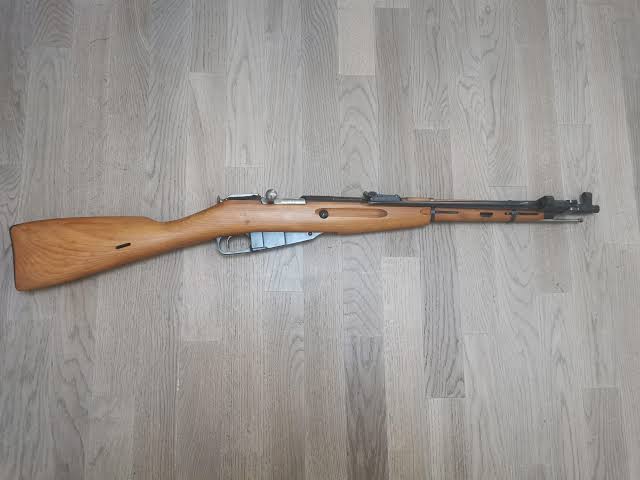
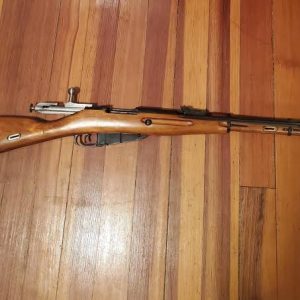
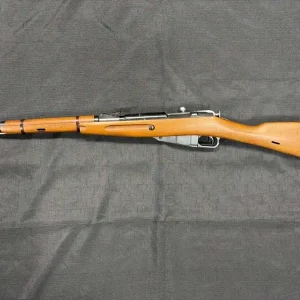
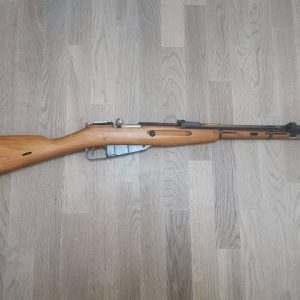
A Legendary Carbine for Sale at Your Premium Gun Store
In the pantheon of military firearms, few rifles command the respect and recognition of the Mosin-Nagant. For over a century, this rugged bolt-action platform has served as the backbone of Russian and Soviet military forces. Among its many variants, the Mosin Nagant 1944 carbine known as the M44 stands as a pinnacle of wartime development. It represents the final evolution of a design that saw service from the snowy fields of the Eastern Front to the jungles of Vietnam and beyond.
At Your Premium Gun Store, we are proud to offer a selection of these historic M44 Mosin Nagant rifles. Whether you are a seasoned collector, a history enthusiast, or a hunter looking for a reliable brush gun, the M44 offers a unique combination of ruggedness, power, and historical significance. This comprehensive guide will explore everything you need to know about the Mosin-Nagant rifle, its history, specifications, and why it remains a sought-after firearm for sale today.
The History of the Mosin-Nagant: From Imperial Russia to the World
Understanding the M44 requires a step back into history. The Mosin-Nagant rifle was born from a late 19th-century competition. In 1888, the Russian government initiated a committee to find a modern smokeless-powder rifle to replace their aging Berdan rifles. Two promising designs emerged: one from Captain Sergei Ivanovich Mosin, a Russian army officer, and the other from Belgian designer Emile Leon Nagant.
The resulting rifle combined the strengths of both—Mosin’s robust receiver and bolt, featuring dual, opposing locking lugs, with Nagant’s clip-loaded magazine. It was adopted in 1891 as the “Three-Line Rifle,” a reference to its .30 caliber (7.62mm) bore, and went on to become one of the most produced firearms in history, with over 37 million rifles manufactured globally.
The Mosin-Nagant rifle saw service across multiple continents. It was produced not only in Russian arsenals like Tula, Izhevsk, and Sestroryetsk but also under license in Finland, Poland, China, and even the United States by Remington and New England Westinghouse during World War I.
The Development of the M44 Carbine
The M44 Mosin Nagant was a late-war development. Introduced officially in 1944, it was the final variant of the Mosin-Nagant family to see mass production during World War II. It was based on the earlier M38 carbine but featured a crucial addition: an integrated, side-folding bayonet.
This was a significant shift in doctrine. Previous carbine variants were typically issued to specialty troops like artillerymen, signalers, or rear-echelon personnel. The M44 was the first Soviet carbine designed for issue to front-line infantry as well, reflecting the increasing need for a more compact and maneuverable weapon in the close-quarters fighting that characterized the latter stages of the war.
Its production was remarkably short-lived. The M44 was manufactured only from 1943 to 1948, primarily by the Izhevsk Arsenal, with Tula producing it only in 1944. Despite this brief window, the M44 saw extensive use in the final campaigns of World War II, the Korean War, and various other conflicts around the globe.
Technical Specifications: The M44 at a Glance
The M44 is a distinctive rifle, easily identified by its integrated bayonet and shorter length. Here are the core specifications that define this classic firearm:
| Feature | Specification |
|---|---|
| Caliber | 7.62x54mmR |
| Action | Bolt-Action |
| Capacity | 5 rounds (fixed magazine, fed individually or via stripper clips) |
| Barrel Length | 20.2 inches |
| Overall Length (without bayonet) | 39.9 inches |
| Overall Length (with bayonet extended) | ~52.5 inches |
| Weight | ~7.5 lbs (unloaded) |
| Sights | Hooded front post, range-adjustable rear sight (marked to 1,000 meters) |
| Stock Material | Hardwood or laminate wood |
| Bayonet | Side-folding, integrated spike bayonet |
What Makes the M44 Special?
The Integrated Folding Bayonet
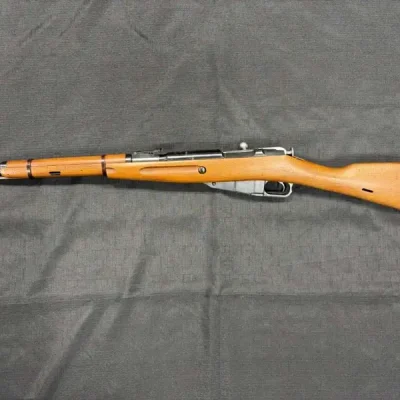
The most iconic feature of the m44 mosin nagant is its side-folding bayonet. Unlike earlier Mosin-Nagant variants that required a separate bayonet to be affixed, the M44’s bayonet is permanently attached to the rifle. It is deployed by pulling the muzzle sleeve rearward, releasing the hinge lock, and rotating the spike forward until it locks in place.
There is a practical and ballistic reason for this feature: M44 carbines were allegedly sighted-in from the factory with the bayonet fixed. The position of the bayonet affects the point of impact, meaning that the rifle will often shoot to a different point of aim with the bayonet folded versus deployed. Many collectors and shooters choose to shoot their M44 with the bayonet extended to ensure accuracy, though the bayonet is easily removable if desired.
A Rugged, Reliable Action
The Mosin-Nagant’s bolt-action is legendary for its reliability. The design is famously robust, featuring dual, opposing locking lugs on the bolt head that lock into the receiver walls. Unlike the Mauser’s one-piece bolt, the Mosin-Nagant uses a multi-piece bolt assembly that includes a floating bolt head and a separate bolt body, making it less susceptible to the effects of dirt, debris, and battlefield grime.
The bolt handle is positioned approximately halfway along the bolt body. While this can be a bit of a reach for shooters with shorter arms, the bolt generally operates smoothly and reliably. The safety mechanism is unusual by modern standards; it requires the shooter to grasp the knurled firing pin knob, pull it rearward against the mainspring, and turn it counterclockwise to engage a locking shoulder on the receiver. It is notoriously difficult to operate for many shooters.
The Power of the 7.62x54R Cartridge
The Mosin Nagant M44 fires the venerable 7.62x54R cartridge, a round that has been in continuous service since 1891. It is a powerful, rimmed cartridge that offers ballistic performance comparable to the .30-06 Springfield or .308 Winchester, though it tends to be more affordable, particularly for surplus ammunition. This makes the M44 an excellent choice for hunting medium to large game, from whitetail deer and hogs to elk and black bear, provided suitable hunting ammunition is used.
Collecting and Shooting the M44 Today
The Appeal of Surplus History
The Mosin Nagant 1944 carbine offers a tangible link to history. These rifles were carried by soldiers in the closing days of World War II, through the Korean War, and in numerous other conflicts. Each rifle carries the marks of its history—the arsenal stamps (such as the Izhevsk “Arrow in Triangle” mark), serial numbers, and the dings and wear on its stock. These are not pristine, modern firearms; they are pieces of living history that have stories to tell.
Current Market: Mosin Nagant M44 for Sale
The M44 has long been a popular firearm in the surplus market. While prices have risen significantly over the past decade due to dwindling supplies, they still represent a solid value for a historical military rifle. Recent listings for an M44 Mosin Nagant for sale show prices in the range of $385 to $750, depending on factors like condition, matching serial numbers, and provenance. A Russian M44 from 1944 in good condition with matching numbers is considered a desirable collector’s piece. At [Your Premium Gun Store Name], we source quality examples to offer our customers.
What to Look For
When searching for a Mosin-Nagant M44 for sale, consider the following:
-
Arsenal Markings: Look for the manufacturer’s stamp (e.g., the Izhevsk “Arrow in Triangle” or Tula’s star). Year of manufacture (1943-1948) also affects value.
-
Matching Numbers: A rifle with all matching serial numbers (on the barrel, receiver, bolt, magazine floorplate, and buttplate) is generally more valuable than a “force-matched” or non-matching example.
-
Bore Condition: The condition of the bore is critical for accuracy and performance. Inspect the rifling for wear, pitting, or rust.
-
Stock Condition: A stock with a clear finish and minimal repairs is preferable, but many M44s have the scars of wartime use and arsenal refurbishment.
-
Refurbishment Marks: Many rifles were refurbished after the war. Look for marks indicating refurbishment; these are common and don’t necessarily detract from value but are part of the rifle’s history.
Reviews
There are no reviews yet.